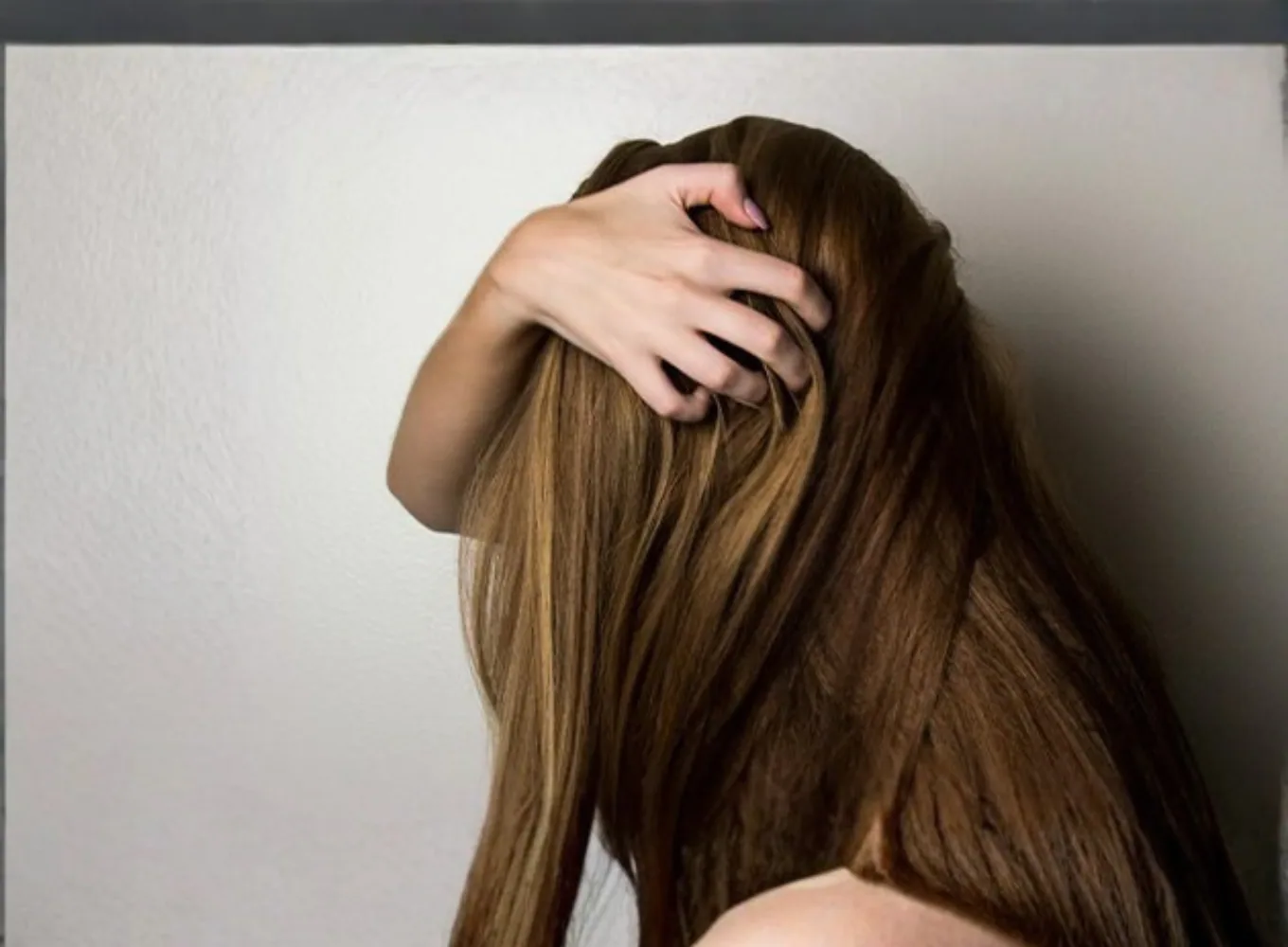
Woman seen from behind gripping a handful of her long hair at the crown — trichotillomania and dermatillomania therapy in Los Angeles
✓ LA HAIR-PULLING & SKIN-PICKING THERAPISTS

Hair-pulling & skin-picking therapy
in LA that quiets the urge.

The pull or the pick brings a second of relief — then the shame, the hiding, and the promise to stop that never holds. Trichotillomania and dermatillomania are body-focused repetitive behaviors, not failures of willpower. Our therapists combine Habit Reversal Training and ACT with somatic and nervous system-based therapy to work with the tension underneath the urge, not just the hands.

Pulling and picking takes many shapes.

A few of the ways body-focused repetitive behaviors show up for our therapy clients.

hair pullingskin pickingpulling without noticingpicking at blemisheshats, makeup, long sleevestension, then reliefbald patches or scabsnail or cheek biting“just one more”pulling brows or lasheshiding it for yearsshame afterward
WHY WE DO THIS WORK
“You can’t stop the waves, but you can learn to surf.”
— Jon Kabat-Zinn
FROM THE FOUNDER OF MY LA THERAPY

A mini deep dive into anxiety and 
the urge to pull or pick.

Our founder, Brooke Sprowl has 20 years specializing in anxiety, OCD-spectrum conditions, phobias, panic attacks and health anxiety. Her signature approach, Nervous System-Based Therapy, works at an unconscious level to shift the patterns running the show beneath the surface.

Brooke Sprowl, LCSW, founder of My LA Therapy
Brooke Sprowl, LCSW
Founder & Clinical Director
20 years in practice
WHAT PULLING & PICKING SOUND LIKE

The relief lasts a second.
The shame lasts all day.

“I don’t decide to pull. I look down and there’s hair in my hand.”
“I’ve worn my hair the same way for ten years so no one sees the patch.”
“The picking starts as fixing one spot. An hour later my face is bleeding.”
“Nobody knows — not my partner, not my doctor, not my closest friend.”
“I promised myself I’d stop. I’ve promised a hundred times.”
“I skip swimming, wind, haircuts, anything that might show it.”

If you're nodding, that's exactly where we begin.

Find my therapist →
Research-based therapy for hair pulling & skin picking

You already know you’re doing it. Knowing has never made the hands stop.

Trichotillomania (hair pulling) and dermatillomania (skin picking) are body-focused repetitive behaviors — BFRBs — closely related to OCD. Trichotillomania usually begins around age 12 and affects an estimated 8–11 million Americans; the real number is likely higher, because shame keeps most people from ever telling anyone.

The pattern is the same for both: tension or restlessness builds, the pull or the pick brings a moment of relief or even pleasure, and the relief teaches the nervous system to reach for the behavior again. Willpower fails because the behavior is doing a job — until something else does that job, the hands go back. Below are the telltale signs:

The good news

Hair pulling and skin picking are highly treatable.

Research-based therapy teaches you to catch the urge early, give the tension somewhere else to go, and loosen the shame that keeps the cycle running. Treatment typically combines:

Habit Reversal TrainingACTsomatic workstimulus controlnervous system regulation
Rising tension
Pulling or picking
Relief, then shame
Hiding the damage
Promises to stop
HAIR PULLING, SKIN PICKING & RELATED BFRBS

Pulling and picking have more than one face.

Trichotillomania (hair pulling) and dermatillomania (skin picking) are body-focused repetitive behaviors — BFRBs — closely related to OCD. Trichotillomania usually begins around age 12 and affects an estimated 8–11 million Americans; the real number is likely higher, because shame keeps most people from ever telling anyone.

Woman with long hair gripping a fistful of it at the crown — trichotillomania (hair pulling) therapy in Los Angeles

Trichotillomania (hair pulling)

Trichotillomania is recurrent pulling of hair from the scalp, eyebrows, eyelashes, or body — most often beginning around age 12.

  • – Pulling from the scalp, brows, lashes, or body
  • – Rising tension before, relief or pleasure during
  • – Visible thinning, patches, or missing lashes
  • – Rituals with the pulled hair — inspecting, rolling, biting
  • – Hats, styling, or makeup to hide the evidence
  • – Repeated attempts to stop that don’t hold
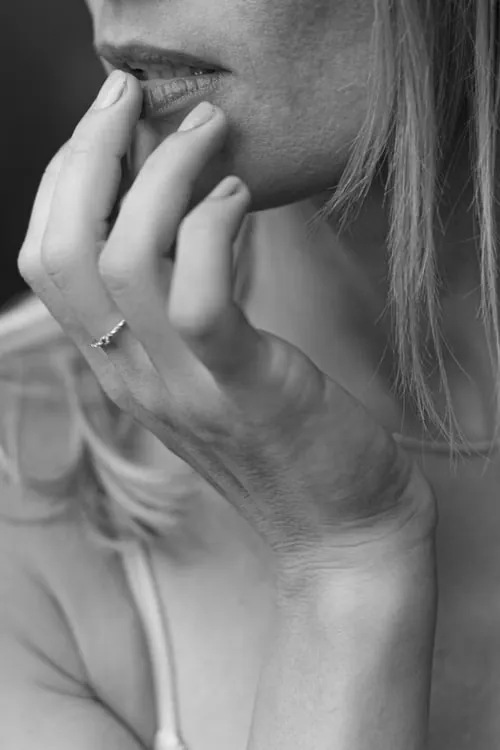
Black and white close-up of a woman biting the skin at her fingertip against her lips — dermatillomania (skin picking) therapy in Los Angeles

Dermatillomania (skin picking)

Excoriation disorder — chronic skin picking — is picking at skin, scabs, or blemishes until it causes wounds, scarring, and real disruption to daily life.

  • Picking at the face, arms, cuticles, or scalp
  • Trying to “fix” a bump, scab, or blemish
  • Sessions that run far longer than intended
  • Open sores, scarring, or infection
  • Long sleeves, concealer, or avoiding mirrors and photos
  • Shame that keeps the picking secret for years
Woman with curly hair and glasses absently biting her nail while reading — focused versus automatic pulling and picking, BFRB therapy in Los Angeles

Focused vs. automatic

Most people do both kinds of pulling or picking — and each calls for a different tool.

  • Focused: pulling or picking to relieve tension, an itch, or a “not right” feeling
  • Focused: often in front of a mirror, with full attention
  • Automatic: done without noticing — reading, driving, scrolling
  • Automatic: discovered only by the hair in your hand or the blood on your fingers
  • Focused episodes respond to urge-surfing and ACT
  • Automatic episodes respond to awareness training and barriers
Woman lying on a white bed covering her face with both hands — the shame spiral that keeps hair pulling and skin picking hidden, BFRB therapy in Los Angeles

The shame spiral

Shame is not a side effect of pulling and picking. Shame is fuel — and the hiding keeps the tension high.

  • · Hiding the behavior from partners, friends, and doctors
  • · Avoiding swimming, wind, intimacy, haircuts, or bright light
  • · Self-criticism that spikes tension — and the urge with it
  • · Promises to stop, broken, then more pulling to cope
  • · Years without telling a single person
  • · Relief when a therapist finally names it as a condition
THE PULL-AND-PICK CYCLE

Pulling and picking aren’t about the hair or the skin. They’re about the relief.

Pulling and picking run on a three-stage cycle, and each stage calls for a different tool. Most people only ever fight the middle stage — the hands — which is why willpower alone fails.

Stage one

The tension builds

  • Tension, boredom, anxiety, or a “not right” feeling builds
  • A trigger: a mirror, a rough patch, a stray hair, a long drive
  • The urge arrives — sometimes consciously, often not
  • Resisting on willpower alone makes the tension louder
Stage two

The behavior brings relief

  • The pull or the pick brings instant relief, even pleasure
  • The nervous system registers: that worked
  • Minutes or an hour pass before you surface
  • The bar for “enough” drifts higher every time
Stage three

The shame keeps the cycle alive

  • Shame and self-criticism flood in
  • The damage gets hidden — hats, sleeves, makeup
  • Hiding keeps the stress high, which seeds the next urge
  • Interrupting this step is where therapy does its work
OUR BFRB THERAPISTS

Not the next name
in a directory — the right therapist chosen for you.

Every therapist on our team is rigorously vetted and trained by our founder, Brooke Sprowl, LCSW, with 20 years of clinical experience. So when you come to us for hair pulling or skin picking, we get to know your unique needs, personality and preferences then match you with the right specialist for you.

THERAPISTS FOR HAIR PULLING & SKIN PICKING

Therapists who treat pulling and picking with evidence-based therapy, not guesswork.

Personally vetted and trained by our founder, our team has special training in Nervous System-Based Therapy, offering real-time feedback for the obsessive loops and defense mechanisms running underneath.

Meet the whole team →
The standard we hold
Twenty years of clinical experience behind every match.
★ 4.9average rating
100%match guarantee
Hand-matched, on us

Stop searching. We'll do it for you.

Tell us what's going on and we'll hand-select the right therapist for you.

1
You share what's going on
A few details — that's this form.
2
We hand-match you
Our therapist matching specialist personally matches you, usually the same day.
3
You meet, and decide
Love your therapist or get a full refund on your first session.
★★★★★
"I was in therapy on and off for 20 years. Brooke did more in one session than years of work with my previous therapists."

Let's find you the right therapist.

✓Every therapist vetted by Brooke Sprowl, LCSW · 20 years in practice
How can we help? *
Choose any that apply.
Which locations are most convenient for you?
More locations = more options
Free & confidential · Love your therapist — or your money back
★★★★★
"I was in therapy on and off for 20 years. Brooke did more in one session than years of work with my previous therapists."
Client reviews

When the hands finally rest.

★★★★★Verified client reviews
★★★★★
You did more in 45 minutes than my last therapist did in a year!
★★★★★
From the beginning of our session, Brooke knew exactly what tools and questions would work for my particular psychology. No other therapist has been able to do that.
★★★★★
I felt very seen, understood, and supported. Brooke went right to the source of the issue while staying so gentle and kind.
★★★★★
Brooke has the true gift of insight and compassion, getting straight to the heart of your blind spots in a way that’s truly changed my life.
★★★★★
Therapy helped me untangle so much confusion and bring peace to where I once felt fear. I feel free and alive for the first time in a long time.
★★★★★
My vivid imagination wants to create terrifying monsters under the bed. In a lot of cases those monsters are nothing more than a heap of laundry that just needs to be aired out.
Status quo vs. My LA Therapy

There’s a better way to find your therapist.

Status quo
The My LA Therapy way
✕You cycle through dozens of therapists, unsure if they really fit your needs.
✓We personally match you with a therapist who fits your unique needs, personality, and preferences.
✕Therapists offer a listening ear but little feedback.
✓We offer practical feedback and actionable advice, challenging you to think and exist differently.
✕The therapy focuses on intellectual insight, leaving deeper problems untouched.
✓We intervene on a somatic and nervous system level, interrupting unconscious patterns in real-time.
✕Symptoms get managed on a superficial level so the same patterns keep repeating.
✓We treat the root cause and provide tangible, research-based tools that create lasting change.
✕You pay for your session whether it’s the right fit or not.
✓We guarantee you’ll love your therapist or you get a full refund on your first session.
Our founder’s signature approach

Nervous System-Based Therapy.

The original framework our founder developed over twenty years in practice, and the backbone of how we treat pulling and picking: working with the tension itself, not just the hands that discharge it.

✓Developed by our founder Brooke Sprowl, LCSW
01

Physiological calibration

Real-time anxiety modulation, nervous system regulation, and autonomic tracking let us catch the surge as it rises in the room and turn your system’s volume back down in real-time.

02

Defense system mapping

Unconscious anxiety activates defense mechanisms that once kept us safe but tend to cause reverberating harmful patterns that keep us stuck. We identify and compassionately interrupt these defense mechanisms to break the cycle.

03

Multi-modal processing

Anxiety travels different pathways in different people, through thinking, muscle, or gut. We work somatically, experientially, cognitively, and with parts, understanding various pathways of anxiety require different interventions.

See how it works →
HELP FOR HAIR PULLING & SKIN PICKING STARTS HERE

Start with a free call.

Our therapist matching specialist knows every therapist on our roster personally and who is the best fit for your unique needs and personality.

✓30 minutes, free. No charge, no commitment.
✓We listen, then hand-select your therapist from our small, boutique roster.
✓We guarantee you’ll love your therapist or you get a full refund on your session.
Book a free call →
Illustration of a therapist and client in conversation
How we treat hair pulling & skin picking

Breaking the cycle takes more than insight.

Our therapists are specifically trained in research-based treatment for body-focused repetitive behaviors. Habit Reversal Training and ACT carry the strongest evidence, and we pair them with somatic and nervous-system work because the urge lives in the body. Your therapist draws on the ones that fit how your pulling or picking actually presents — focused, automatic, or both.

LA BFRB THERAPY IN-PERSON

In-person therapy for hair pulling & skin picking across Los Angeles.

Our warm and experienced LA BFRB specialists offer in-person therapy at 7 office locations across the city, plus online therapy anywhere in California, or a mix of both.

Santa MonicaWest LABeverly HillsEncinoStudio CityEcho ParkPasadena We come to you Hybrid Online (in CA)
7 LA offices
A NOTE FROM OUR FOUNDER

Pulling and picking are not a lack of willpower. They’re a nervous system asking for relief.

Almost everyone who comes to us for hair pulling or skin picking has carried the secret for years — through haircuts they dreaded, pool parties they skipped, partners they never told. Most have been told, or have told themselves, to just stop. If stopping were a matter of deciding, you would have stopped a long time ago.

Trichotillomania and dermatillomania are body-focused repetitive behaviors, and the behavior is doing a job: discharging tension the nervous system has nowhere else to put. That is why willpower fails, and why shame makes the pulling worse — shame is tension. In twenty years of practice I have watched clients go from hiding patches to forgetting to check for them, not by white-knuckling, but by giving the nervous system another way to settle.

Our therapists combine Habit Reversal Training and ACT with somatic and Nervous System-Based work, so you learn to notice the urge, ride it, and meet the feeling underneath it — in a relationship where nothing about the behavior is shameful to say out loud.

Brooke Sprowl, LCSW
Brooke Sprowl, LCSW, founder and clinical director of My LA Therapy
Brooke Sprowl, LCSW
Founder & Clinical Director
20 years in practice
My LA Therapy
A CBT WORKBOOK

Mindset Mastery Guide

A research-based guide for mastering irrational thoughts.
Brooke Sprowl, LCSW
mylatherapy.com
Free resource for anxiety & depression

Learn to quiet your most anxious thoughts.

Learn scientifically proven CBT techniques to quiet the shame and anxious thoughts behind hair pulling and skin picking so you can see yourself in more realistic and empowering ways.

Inside the guide · 6 pages
My LA Therapy
A CBT WORKBOOK

Mindset Mastery Guide

A research-based guide for mastering irrational thoughts.
Brooke Sprowl, LCSW
mylatherapy.com
Mindset Mastery Guide
My LA Therapy
Mindset Mastery Guide
Mastering Irrational Thoughts

Think of this guide like a workout for your well-being.

The more you practice, the better your mental endurance and fitness will be. Practice often to create greater resiliency, self-esteem, and courage.

Often our anxiety, depression, and poor self-esteem are triggered by Thought Distortions that reinforce our deepest fears about ourselves, others, and our future.

We tend to unquestioningly accept these Thought Distortions as true when we leave them unchecked and do not examine them more deeply.

With a deeper investigation of our Thought Distortions, we may discover important truths about ourselves and how these knee-jerk, reactive thoughts contribute to our negative, Self-Limiting Core Beliefs and narratives.

Cognitive Behavioral Therapy (CBT) is a research-proven technique that can help transform depression, anxiety, and low self-esteem and help us see ourselves and the world in more empowering, balanced, and realistic ways.

CBT takes the scientific method and uses it to kick Distorted Thoughts to the curb so we can become more confident, peaceful, and hopeful.

This is the beginning of creating the life you've always wanted and becoming the person you've always wanted to be.

mylatherapy.com1 of 6
A workout for your well-being
My LA Therapy
The Thought Record
Worked example
Trigger Situation
What happened, where, and who were you with? Describe it in detail.
"I had a fight with my boyfriend about moving in together."
Trigger Feelings
Name the feelings that arose, and rate each from 1–10 (10 = most extreme).
Anxious · 8Depressed · 7Rejected · 5
Your Thought Distortion
What went through your mind? What did you tell yourself this means about you, others, or your future?
"He’s going to break up with me." "No one will ever love me." "I don’t want to be alone."
Evidence for Your Thought Distortion — The Lawyer
Like a lawyer, list only the facts that support this thought — no interpretation or mind-reading.
"My past relationships were ended by my partners. He said he doesn’t want to move in. My dad left when I was a kid."
Thought Transformation — The Judge
Like a judge, weigh both sides into one balanced statement. Rate how much you believe it, 1–10.
"Even though I’ve felt rejection before and he isn’t ready to move in yet, many people love me and I am not alone."
Rate Feelings
Now re-rate your Trigger Feelings from 1–10.
Anxious · 4Depressed · 3Rejected · 1
mylatherapy.com2 of 6
Step-by-step CBT technique
My LA Therapy
The Thought Record
Your turn
Trigger Situation
What happened, where, and who were you with? Describe it in detail.
Trigger Feelings (rate 1–10)
Name the feelings that arose, and rate each from 1–10 (10 = most extreme).
Your Thought Distortion
What went through your mind? What did you tell yourself this means about you, others, or your future?
Evidence for Your Thought Distortion — The Lawyer (facts only)
Like a lawyer, list only the facts that support this thought — no interpretation or mind-reading.
Thought Transformation — The Judge (rate 1–10)
Like a judge, weigh both sides into one balanced statement. Rate how much you believe it, 1–10.
Rate Feelings (rate 1–10)
Now re-rate your Trigger Feelings from 1–10.
mylatherapy.com3 of 6
Apply your real life situation
My LA Therapy
Mindset Mastery Guide
Prompts

Questions to help challenge your Thought Distortions

01Have I had any experiences that show that this thought is not completely true all the time?
02If my best friend or someone I loved had this Thought Distortion, what would I tell them?
03If my best friend or someone who loves me knew I was thinking this thought, what would they say to me? What evidence would they point out to me that would suggest that my thoughts were not 100% true?
04When I am not feeling this way, do I think about this type of situation any differently? How?
05When I have felt this way in the past, what did I think that helped me feel better?
06Have I been in this type of situation before? What happened? Is there anything different between this situation and previous ones? What have I learned from prior experiences that could help me now?
07Are there any small things that contradict my Thought Distortion that I might be discounting as not important?
08Five years from now, if I look back at this situation, will I look at it any differently? Will I focus on any different part of my experience?
09Are there any strengths or positives in me or in the situation that I am ignoring?
10Am I blaming myself for something over which I do not have complete control?
mylatherapy.com4 of 6
Prompts to challenge irrational thoughts
My LA Therapy
Next steps

Next steps.

Our Thought Mastery Guide is just one of many research-proven tools we use to help you overcome your inner roadblocks, find greater peace, and support your self-transformation.

To dive deeper and take your transformation to the next level, book a free call with our Matching Specialist so we can pair you with one of our warm, experienced therapists.

Book a free call →

To book a free call, click the button above or learn more at: mylatherapy.com

We are here to answer any questions and to empower you to discover new ways of being to create a more purposeful, peaceful, and soulful life.

Brooke Sprowl6 of 6
Next steps

You’ve hidden the pulling long enough. Let’s quiet the urge.

You deserve a life the urge doesn’t get to run. One conversation is all it takes to know whether we’re the right people to help you take it back.

Find my BFRB therapist →
FAQS ABOUT TRICHOTILLOMANIA & SKIN-PICKING THERAPY

Before you reach out.

Still deciding? The free 30-minute consult exists for exactly this — no charge, no commitment.

Is hypnotherapy the only treatment for trichotillomania and skin picking?
No. Hypnotherapy can help some people, but the strongest evidence is for Habit Reversal Training (a CBT approach) and Acceptance and Commitment Therapy, and the best outcomes combine them with work on the tension underneath the urge. Our therapists draw on HRT, ACT, somatic, and Nervous System-Based Therapy depending on how your pulling or picking shows up.
Is trichotillomania a form of OCD?
Not exactly. Trichotillomania and dermatillomania sit in the same diagnostic category as OCD — obsessive-compulsive and related disorders — and share some of the same brain circuitry, but each is its own diagnosis with its own treatment path. Where OCD compulsions usually relieve anxiety tied to an obsessive thought, pulling and picking behave more like a habit loop: tension rises and the behavior discharges it, with or without a specific fear attached. That distinction is why Habit Reversal Training, not exposure and response prevention, is the first-line treatment. If OCD symptoms are also present, we treat both.
I pull or pick without even noticing. Can therapy help with that?
Yes — this is called automatic pulling or picking, and it’s extremely common. Because it happens outside awareness, the first goal in therapy is building awareness itself: noticing the early cues, the settings where it tends to happen, and the habits around it. From there, Habit Reversal Training uses stimulus control and competing responses to interrupt the behavior before it starts, even when the urge itself stays mostly out of conscious view.
Will I have to show my therapist the damage?
No. Nothing about your hair, your skin, or the visible effects of pulling or picking needs to be shown, examined, or photographed for treatment to work. Your therapist will ask what’s happening and how it feels, not inspect the result — and most clients find that simply saying it out loud, without having to prove it, is where the shame starts to lift.
How long does therapy for hair pulling or skin picking take?
Many people see a real drop in frequency within the first two to three months of structured work. Longer-standing patterns, especially ones that began in adolescence, take longer to fully resolve, and relapse prevention is part of the plan. Your therapist will be candid with you about what your situation likely calls for.
Do you offer online therapy for trichotillomania and dermatillomania?
Yes. You can meet online anywhere in California, or in person at any of our LA offices, or a mix of both. Habit Reversal Training and ACT translate well to video, and many clients prefer the privacy of working from home.