A hand resting flat against the chest — somatic experiencing and body psychotherapy in Los Angeles
✓ Somatic experiencing · Los Angeles

Somatic therapy, for trauma
that lives in the body.

Animals have a keen ability to recover from trauma innately once it’s no longer present. Humans, on the other hand, hold onto their trauma with lingering feelings of shame, guilt, and fear, and often develop conditions like Post Traumatic Stress Disorder (PTSD).

The traumatic experience literally becomes “stuck” in our bodies, which can take a huge toll on our physical and emotional well-being and have reverberating effects on our relational connections, self-worth, and ability to function. That’s where Somatic Experiencing comes in.

Somatic work helps: trauma held in the bodyfight, flight or freezehypervigilancenumbness and shutdown
The premise
“I am not what happened to me, I am what I choose to become.”
— Carl Jung
From the founder of My LA Therapy

Diving deeper into somatic therapy.

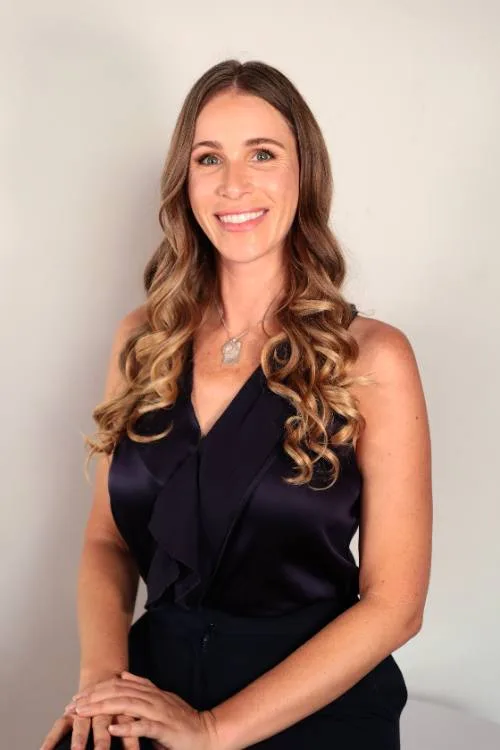
Our founder, Brooke Sprowl, LCSW, has 20 years in clinical practice. Her signature approach, Nervous System-Based Therapy, works at an unconscious level to shift the patterns running the show beneath the surface.

Brooke Sprowl, LCSW, founder of My LA Therapy
Brooke Sprowl, LCSW
Founder & Clinical Director
20 years in practice
More from Brooke
Psychological trauma treatment
Brooke on Broken Brain 2: understanding trauma
Together we will:
  • ✓ Track what your body does in real time — bracing, holding, going still — as it happens
  • ✓ Use pendulation: alternating between difficult sensation and sensation that brings you strength
  • ✓ Build grounding skills you can use before, during and after the hard part
  • ✓ Move at a pace you set, because going slowly is how the body processes rather than re-lives
How somatic therapy works

Your nervous system
is still running the old alarm.

Somatic Experiencing (SE), Somatic Integration and Body Psychotherapy address the long term effects of trauma by helping people fully process their traumatic experiences in their bodies rather than by simply speaking about them.

Somatic Experiencing is a multi-dimensional approach, taking inspiration from many different areas of study such as biology, psychology, stress psychology, ethology, neuroscience, indigenous healing practices and medical biophysics.

SE works by tapping into our autonomic nervous system (ANS), which encompasses the sympathetic nervous system, the parasympathetic nervous system, and the enteric nervous system. All of these systems react in particular ways in the face of trauma: fight, flight, or freeze.

Although the autonomic nervous system is designed to be self-regulating, when a traumatic experience occurs and isn’t fully processed in your body, your system can get out of whack. That means even though the traumatic event or threat is long gone, your body still responds as though it is in the presence of trauma and threat.

For example, if you were hit by a car in the past, your body may go into a trauma response every time you see a similar-looking car or have to cross a busy street.

Somatic Experiencing is designed to help re-regulate your system back to the way it operated before the traumatic event occurred. If your trauma is preventing you from fully functioning and living your best life, then it is time to seek professional help from one of our SE-trained therapists.


What does a typical SE therapy session look like?

What does an SE session
actually look like?

Sessions typically involve gradually exposing you to traumatic material (photos, sounds, old memories) and then checking in with your internal responses, like your heart rate and shift in posture.

If you start experiencing heightened physical responses, your therapist will supply you with self-regulating tools, like “pendulating,” which is a method in which you alternate between recognizing traumatic sensations and sensations that bring you strength and peace.

By pairing traumatic associations with pleasant ones, you will begin to integrate your trauma, re-establishing a sense of inner safety and groundedness. The hope is that the next time you see the proverbial car that looks similar to the one from your accident, your body will not perceive it as a threat.

Although part of the process of Somatic Experiencing involves introducing triggering material, the process of SE is designed to avoid re-traumatizing you by teaching you to slow down, learn grounding skills, and allow your body to process the trauma at the pace that feels safe for you.

At your pace

Slow is how the body heals.

Our highly trained therapists will always go at a pace that you are comfortable with. That’s a huge part of healing trauma as well.

groundingpendulationinner safety
What somatic therapy treats

Where the body
is still holding it.

Somatic work is for the places talking has not reached, where the nervous system is still running a response the situation no longer calls for.

Somatic Experiencing is a helpful tool that can be used in many instances with a wide range of communities, including veterans, first responders, people struggling with addiction, survivors of rape, and children who have experienced abuse.

Trauma and PTSD

Working with what the body held, rather than only the account the mind can give.

  • – Flashbacks and a body that reacts before you can think
  • – Reminders, like the car or the busy street, that still set off the alarm
  • – Processing the experience physically, so it can finally finish

Panic and physical anxiety

Bracing, shallow breath, a stomach that knows before you do.

  • ✓ A racing heart and tight chest with no clear cause
  • ✓ Fight-or-flight that switches on and won’t switch off
  • ✓ Grounding tools you can use the moment it starts

Chronic stress

A system that never came down from alert, and no longer remembers how.

  • Tension that lives in the shoulders, jaw or gut
  • Trouble resting, even when there is time to
  • Re-regulating the nervous system so calm feels familiar again

Dissociation and numbness

Rebuilding contact with sensation slowly enough that it stays tolerable.

  • + Feeling far away, foggy or shut down
  • + The freeze response that kept you safe once
  • + Coming back into the body at a pace that feels safe

Veterans and first responders

Bodies trained to stay ready, still on duty long after the threat has passed.

  • Hypervigilance that doesn’t clock out
  • Startle responses to sounds, crowds or traffic
  • Letting the system stand down without having to tell every story

Sexual assault and abuse

Reclaiming a sense of safety in your own body, without being rushed.

  • · Shame, guilt and fear that stay lodged in the body
  • · Triggers around touch, closeness or certain places
  • · Re-establishing inner and outer safety, at your pace

We are here to help you leave your trauma in the past so you can recover a sense of peace, vitality, and inner and outer safety.

Our therapy methods

Release it from the body,
and restore your peace.

Therapy can successfully improve your life by helping you minimize the anxiety in your life, identify and change underlying thought and behavioral patterns that contribute to your struggles, and provide you with strategies to decrease discomfort while restoring an overall sense of peace.

To experience true and lasting joy in our life, we must face and conquer our pain by healing our underlying trauma and confronting our fears.

See the About Therapy page for a deeper look into this process.

Our evidence-based, scientifically proven interventions are demonstrated by research to be effective in addressing a wide range of issues, such as trauma.

Learn more about our empirically based therapy modalities by visiting our Methods page.

Our therapy methods

Research-based methods,
combined for you.

Somatic therapy is rarely used alone. Our therapists draw from experiential, cognitive-behavioral, mindfulness and psychodynamic therapies — evidence-based interventions demonstrated by research to be effective.

Why our somatic therapy therapists

Evidence-based,
never by the book.

Plenty of therapists list somatic therapy. The difference is judgment — knowing when it is the right move and when the work belongs somewhere deeper. Every therapist on our roster is personally vetted and trained by our founder, Brooke Sprowl, LCSW, with 20 years in clinical practice — so your care is tailored to you rather than run off a protocol. Our team is highly trained and clinically skilled — and, more importantly, open, warm, and authentic. We’re humans too; we’ve been through our own struggles, and that is what equips us to help you navigate yours.

✓Personally vetted by Brooke Sprowl, LCSW
Status quo vs. My LA Therapy

Body-based care,
built around you.

Status quo
The My LA Therapy way
Status quo
✕Talk therapy with a breathing exercise tacked on, called “somatic” on a profile.
The My LA Therapy way
✓Therapists trained in somatic work, not talk therapy with a breathing exercise bolted on.
Status quo
✕Trauma, anxiety and panic treated as purely mental, while the body’s symptoms go unaddressed.
The My LA Therapy way
✓We work with trauma, anxiety, panic and PTSD — and the physical symptoms that come with them.
Status quo
✕Symptoms managed week to week while the nervous system underneath stays on alert.
The My LA Therapy way
✓We go beyond symptoms to the nervous system underneath, so the results hold.
Status quo
✕Pushing through the hard memory on schedule, even when your body is saying stop.
The My LA Therapy way
✓You set the pace. Slowing down is the method, not a concession.
The standard we hold
Twenty years of clinical experience
behind every match.
★ 4.9average rating
100%match guarantee
Hand-matched, on us

Stop searching. We'll do it for you.

Tell us what's going on and we'll hand-select the right therapist for you.

1
You share what's going on
A few details — that's this form.
2
We hand-match you
Our therapist matching specialist personally matches you, usually the same day.
3
You meet, and decide
Love your therapist or get a full refund on your first session.
★★★★★
"I was in therapy on and off for 20 years. Brooke did more in one session than years of work with my previous therapists."

Let's find you the right therapist.

✓Every therapist vetted by Brooke Sprowl, LCSW · 20 years in practice
How can we help? *
Choose any that apply.
Which locations are most convenient for you?
More locations = more options
Free & confidential · Love your therapist — or your money back
★★★★★
"I was in therapy on and off for 20 years. Brooke did more in one session than years of work with my previous therapists."
Your team

Therapists trained in somatic therapy.

Meet the whole team →
Where we work

Eastside, Westside, and everywhere in between.

Seven offices across Los Angeles, plus secure online therapy anywhere in California.

West LABeverly HillsEncinoStudio CityEcho ParkPasadenaSanta Monica All locations
7 LA offices
Client reviews

When the body finally let go.

★★★★★4.9 average · verified client reviews
★★★★★
Brooke has the true gift of insight and compassion — getting straight to the heart of your blind spots in a way that’s truly changed my life.
★★★★★
I felt very seen, understood, and supported — Brooke went right to the source of the issue while staying so gentle and kind.
★★★★★
I’d been in therapy on and off for 20 years. Brooke did more in one session than years of work with my previous therapist.

Your body has been holding this long enough. Let’s help it put it down.

One conversation is all it takes to know whether we’re the right fit.

Find my therapist →
Common questions

Before you reach out.

Still deciding? The free 30-minute consult exists for exactly this — no charge, no commitment.

▸ How is somatic therapy different from talk therapy?

Talk therapy works largely through language and insight. Somatic therapy adds the body: what your nervous system is doing while you talk, and how to change it. Many clients find they already understand their patterns intellectually — somatic work is for when understanding has not been enough.

▸ Will I have to relive my trauma?

No. The process is specifically designed to avoid re-traumatizing you. We teach you to slow down and build grounding skills first, and your body processes the material at the pace that feels safe. Introducing difficult material is part of the work, but being overwhelmed by it is not.

▸ Who is somatic work useful for?

It is used with a wide range of people, including veterans, first responders, survivors of assault, people in recovery, and children who have experienced abuse. It is also effective for anxiety and panic that show up physically.

▸ Do you combine it with other approaches?

Yes. Somatic work is frequently combined with CBT, EMDR, and our founder’s Nervous System-Based Therapy, which puts real-time nervous system tracking at the centre of the session.

▸ Can we do this online?

Yes. We offer secure video sessions anywhere in California. Most of somatic therapy translates directly to video; where a part of it genuinely works better in the room, your therapist will tell you rather than pretend otherwise.

▸ How long does somatic therapy usually take?

It depends on how long the pattern has been running and what sits underneath it. It is not open-ended, though — your therapist will give you a realistic picture after the first session or two rather than a number up front.