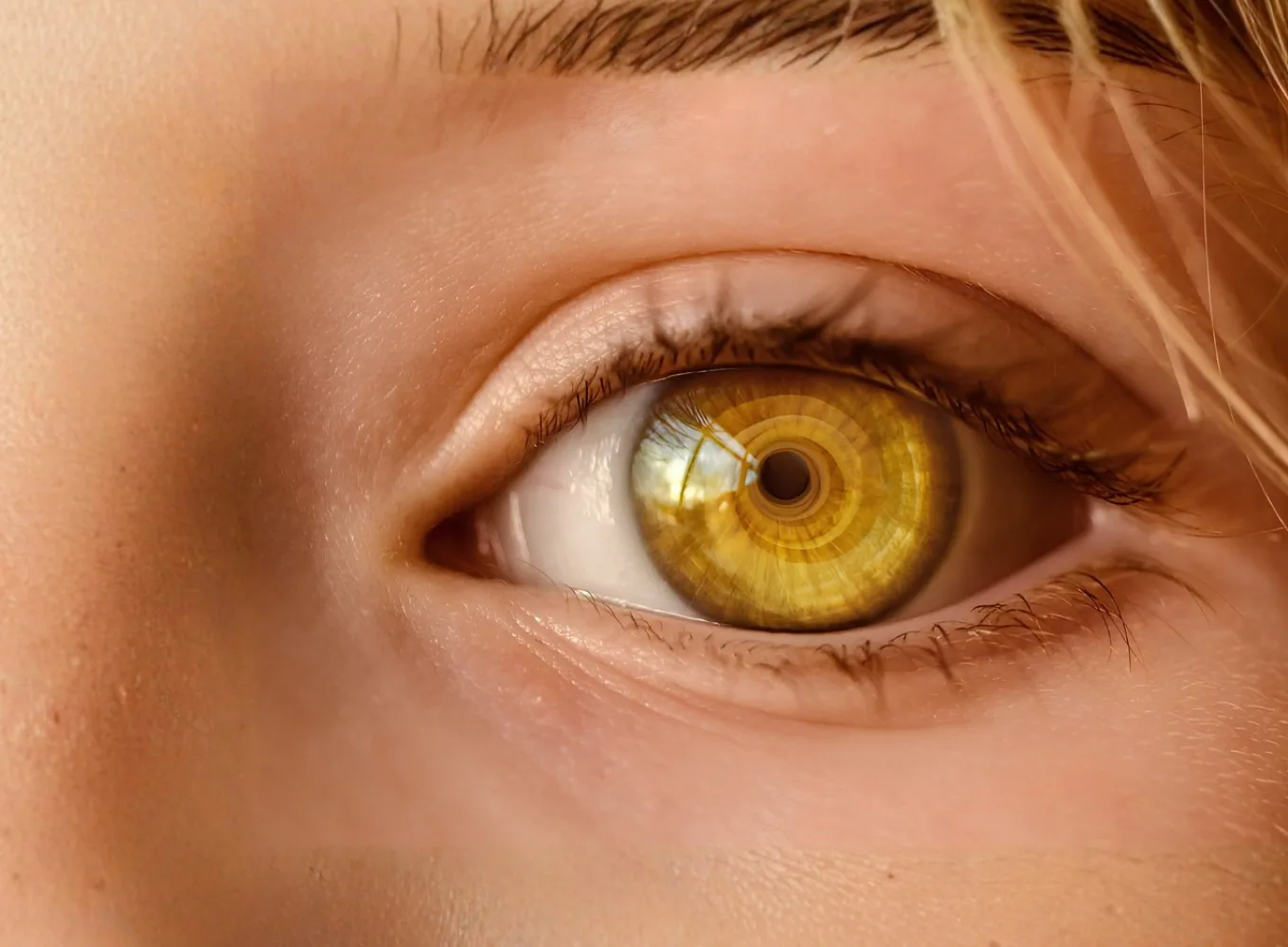
Extreme close-up of a hazel iris — EMDR therapy in Los Angeles
✓ EMDR therapy · Los Angeles

EMDR therapy, for memories
that do not process on their own.

When you think of therapy, you probably envision the conventional setup: therapist and client sitting across from each other in a room, talking about the issues that are plaguing the client. While talk therapy is certainly helpful, it’s important to know that therapy comes in many forms. One of them being rapid eye movement.

EMDR, which stands for Eye Movement Desensitization and Reprocessing, is a scientifically-proven form of therapy that helps with many psychological issues and can be especially effective in treating trauma. EMDR is also very effective in treating anxiety disorders, phobias, depression, in addition to PTSD.

EMDR helps: intrusive memoriesflashbacksnegative self-beliefsphobiasgeneralized anxiety
The premise
“The past is never dead. It is not even past.”
— William Faulkner
From the founder of My LA Therapy

Diving deeper into EMDR.

Our founder, Brooke Sprowl, LCSW, has 20 years in clinical practice. Her signature approach, Nervous System-Based Therapy, works at an unconscious level to shift the patterns running the show beneath the surface.

Brooke Sprowl, LCSW, founder of My LA Therapy
Brooke Sprowl, LCSW
Founder & Clinical Director
20 years in practice
More from Brooke
Brooke Sprowl on trauma
Brooke on Broken Brain 2: understanding trauma
Brooke Sprowl on anxiety therapy
Together we will:
  • ✓ Identify the target memories, and the belief that attached itself to each one
  • ✓ Use bilateral stimulation — eye movement, tapping or alternating sound — to reprocess both
  • ✓ Work through the eight phases at a pace that keeps you resourced
  • ✓ Remove what blocks the mind from finishing a job it already knows how to do
How EMDR works

Reprocess the memory,
not just the story about it.

During EMDR, the therapist and client work together to identify target memories to focus on. In addition to visual memories of the trauma, there is often a negative self-belief attached to the event. For example, the client might believe, “I am unlovable” or “I am a weak person.”

The traumatic memory may continue to live on through dreams, flashbacks, or generalized anxiety.

EMDR involves bilateral stimulation with either rapid eye movement, touching, or auditory sounds. It’s been found that this repeated desensitization technique re-processes the memory of the trauma and the negative beliefs associated with it.

EMDR can help you reprocess what happened to you and target other symptoms of the trauma as well, such as anxiety and depression.

The goal of treatment is to eliminate the discomfort due to unprocessed memories, to teach self-regulation techniques to manage related anxiety, and to change negative self-perceptions into believing in your own sense of safety, control, and responsibility.

The EMDR Institute uses a helpful metaphor to explain its technique: EMDR healing works in a similar way to how our bodies heal after an injury. After getting a cut or a deep wound, our body starts to repair itself. However, there might be a “foreign object” that enters the wound, or you might repeatedly get injured at the same site, which makes it even harder for the wound to heal. Once you are able to remove the “foreign object” so that you are not becoming continuously re-injured, your body can begin healing again.

This is the same way EMDR acts with our minds: once we remove any barriers to our healing, our body can begin the process of recovery and transform the trauma into healing.

The research behind EMDR

Results you don’t hear
about every day.

In over 30 studies, 85–90% of PTSD patients were no longer symptomatic after three 90-minute EMDR sessions. You don’t hear statistics like that every day.

In some studies, it has been found to be more effective than SSRI medication, and it’s even endorsed by the World Health Organization (WHO), the US Department of Veterans Affairs (VA), and the American Psychiatric Association (APA).

EMDR has been used to effectively treat traumas such as child abuse, sexual assault, combat trauma, and even humiliation or harassment.

It can be combined with other treatment modalities, such as CBT and Mindfulness.

The phases of EMDR

Eight phases,
one structured course.

EMDR therapy involves eight phases in order to heal from psychological trauma.

The phase

Phase 1 · Your history

In Phase 1, our therapist gets your complete history. It can happen in one or multiple sessions.

Our therapists work with you to identify and recognize any memories that may have caused you distress in the past, and anything that might be causing you distress right now. You might even work together to identify skills that you would like to develop in the future.

The phase

In Phase 1, our therapist gets your complete history. It can happen in one or multiple sessions.

Our therapists work with you to identify and recognize any memories that may have caused you distress in the past, and anything that might be causing you distress right now. You might even work together to identify skills that you would like to develop in the future.

What EMDR treats

Memories that did not
finish processing.

EMDR works wherever a memory is still live, surfacing through dreams, flashbacks or an anxiety that seems to have no present cause.

Post-traumatic stress

The use EMDR is best known for, and the one with the deepest research behind it.

  • – Flashbacks, nightmares and intrusive memories
  • – In over 30 studies, 85–90% of PTSD patients were no longer symptomatic after three 90-minute sessions
  • – Endorsed by the WHO, the VA and the American Psychiatric Association

Child abuse and early trauma

Repeated early experience, where the belief attached to it has had decades to set.

  • ✓ Child abuse and neglect that still shapes the present
  • ✓ Negative self-beliefs like “I am unlovable” or “I am a weak person”
  • ✓ Reprocessing the memory and the belief together

Sexual assault and harassment

An event the system never finished filing, often with shame attached to it.

  • Intrusive images and body sensations tied to the memory
  • Humiliation and harassment, as well as assault
  • Far less need to describe what happened in detail than talk therapy asks

Combat trauma

The memories service leaves behind, worked with through an approach the US Department of Veterans Affairs endorses.

  • + Memories that live on through dreams and flashbacks
  • + A body still braced for a threat that has passed
  • + A structured, eight-phase course rather than open-ended talk

Phobias

A fear response wired to a specific trigger, reprocessed rather than only tolerated.

  • Fears of heights, flying, animals, needles and more
  • The memory that first wired the fear in place
  • Coping skills from Phase 2 for the moments in between

Anxiety and depression

Where either traces back to something unprocessed rather than arising on its own.

  • · Generalized anxiety with no clear present cause
  • · Depression rooted in an earlier loss or trauma
  • · Self-regulation techniques to manage the anxiety attached to old memories

Therapy can successfully improve your life by helping you minimize your anxiety, identifying and changing underlying thought and behavioral patterns that contribute to your struggles, and providing you with strategies to decrease discomfort while restoring an overall sense of peace.

To experience true and lasting joy in our life, we must face and conquer our pain by healing our underlying trauma and confronting our fears.

EMDR is an evidence-based, scientifically-proven intervention that has been demonstrated by research to be effective in addressing anxiety disorders, phobias, depression, in addition to PTSD and various forms of abuse and trauma.

Our therapy methods

Research-based methods,
combined for you.

EMDR is rarely used alone. Our therapists draw from experiential, cognitive-behavioral, mindfulness and psychodynamic therapies — evidence-based interventions demonstrated by research to be effective.

Why our EMDR therapists

Evidence-based,
never by the book.

Plenty of therapists list EMDR. The difference is judgment — knowing when it is the right move and when the work belongs somewhere deeper. Every therapist on our roster is personally vetted and trained by our founder, Brooke Sprowl, LCSW, with 20 years in clinical practice — so your care is tailored to you rather than run off a protocol. Our team is highly trained and clinically skilled — and, more importantly, open, warm, and authentic. We’re humans too; we’ve been through our own struggles, and that is what equips us to help you navigate yours.

✓Personally vetted by Brooke Sprowl, LCSW
Status quo vs. My LA Therapy

Research-based care,
built around you.

Status quo
The My LA Therapy way
Status quo
✕A therapist who lists EMDR on a profile after a weekend workshop.
The My LA Therapy way
✓Therapists trained and experienced in EMDR, not newly certified in it.
Status quo
✕EMDR treated as a PTSD-only tool, with anxiety, phobias and depression left to something else.
The My LA Therapy way
✓EMDR for PTSD, trauma, phobias, anxiety and depression.
Status quo
✕One technique applied in isolation, whether or not it suits you.
The My LA Therapy way
✓Combined with CBT, mindfulness or somatic work where that serves you better.
Status quo
✕A detached, procedural approach to the most painful memories you carry.
The My LA Therapy way
✓Warm, experienced therapists committed to compassionate, client-centered care.
The standard we hold
Twenty years of clinical experience
behind every match.
★ 4.9average rating
100%match guarantee
Hand-matched, on us

Stop searching. We'll do it for you.

Tell us what's going on and we'll hand-select the right therapist for you.

1
You share what's going on
A few details — that's this form.
2
We hand-match you
Our therapist matching specialist personally matches you, usually the same day.
3
You meet, and decide
Love your therapist or get a full refund on your first session.
★★★★★
"I was in therapy on and off for 20 years. Brooke did more in one session than years of work with my previous therapists."

Let's find you the right therapist.

✓Every therapist vetted by Brooke Sprowl, LCSW · 20 years in practice
How can we help? *
Choose any that apply.
Which locations are most convenient for you?
More locations = more options
Free & confidential · Love your therapist — or your money back
★★★★★
"I was in therapy on and off for 20 years. Brooke did more in one session than years of work with my previous therapists."
Your team

Therapists trained in EMDR.

Meet the whole team →
Where we work

Eastside, Westside, and everywhere in between.

Seven offices across Los Angeles, plus secure online therapy anywhere in California.

West LABeverly HillsEncinoStudio CityEcho ParkPasadenaSanta Monica All locations
7 LA offices
Client reviews

When the memory finally stopped running the day.

★★★★★4.9 average · verified client reviews
★★★★★
Brooke has the true gift of insight and compassion — getting straight to the heart of your blind spots in a way that’s truly changed my life.
★★★★★
I felt very seen, understood, and supported — Brooke went right to the source of the issue while staying so gentle and kind.
★★★★★
I’d been in therapy on and off for 20 years. Brooke did more in one session than years of work with my previous therapist.

The memory has had long enough. Let’s finish processing it.

One conversation is all it takes to know whether we’re the right fit.

Find my therapist →
Common questions

Before you reach out.

Still deciding? The free 30-minute consult exists for exactly this — no charge, no commitment.

▸ Does EMDR really work?

In over 30 studies, 85–90% of PTSD patients were no longer symptomatic after three 90-minute sessions, and in some studies EMDR outperformed SSRI medication. It is endorsed by the World Health Organization, the US Department of Veterans Affairs and the American Psychiatric Association.

▸ Do I have to describe the trauma in detail?

Much less than people expect. EMDR works on the memory and the belief attached to it rather than on a detailed verbal account, which is one reason clients who find talking about it unbearable often tolerate EMDR well.

▸ What does bilateral stimulation actually involve?

Rapid eye movement following your therapist’s hand, gentle tapping, or alternating sounds through headphones. Which one is used is a matter of what works for you.

▸ Can EMDR be combined with other therapy?

Yes. It is frequently combined with CBT, mindfulness-based cognitive therapy and somatic work.

▸ Can we do this online?

Yes. We offer secure video sessions anywhere in California. Most of EMDR translates directly to video; where a part of it genuinely works better in the room, your therapist will tell you rather than pretend otherwise.

▸ How long does EMDR usually take?

It depends on how long the pattern has been running and what sits underneath it. It is not open-ended, though — your therapist will give you a realistic picture after the first session or two rather than a number up front.