A fountain pen writing in cursive across lined paper — narrative therapy in Los Angeles
✓ Narrative therapy · Los Angeles

Narrative therapy. You are not
the story you inherited.

Stories are at the center of our lives, from the stories we tell that make up our personal mythology to the stories we invent from our wounding that we project onto the world. Our stories are a vital part of compounding our successes as well as healing our wounds.

Through rewriting our stories, we construct new meanings, release shame, and become free to engage with the world as it is in the present, rather than carrying around and reliving the past.

Narrative therapy helps: shamelimiting self-beliefsrepeating patternsidentity after traumaself-worthfeeling defined by a diagnosis
The premise
“The person is never the problem; the problem is the problem.”
— Michael White
From the founder of My LA Therapy

Diving deeper into narrative therapy.

Our founder, Brooke Sprowl, LCSW, has 20 years in clinical practice. Her signature approach, Nervous System-Based Therapy, works at an unconscious level to shift the patterns running the show beneath the surface.

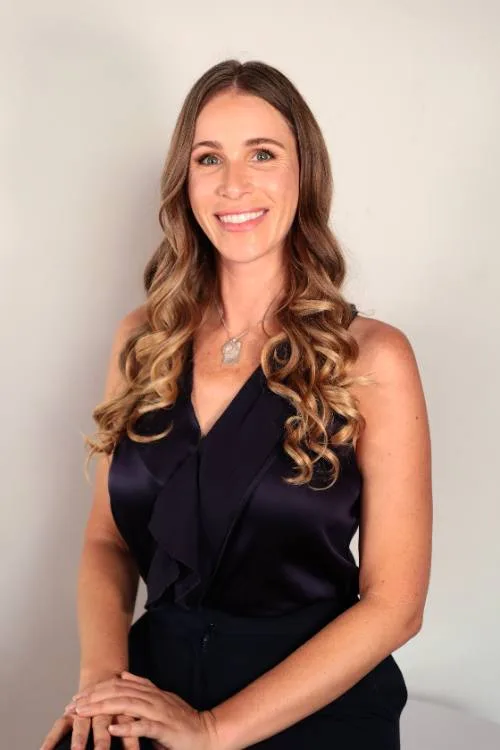
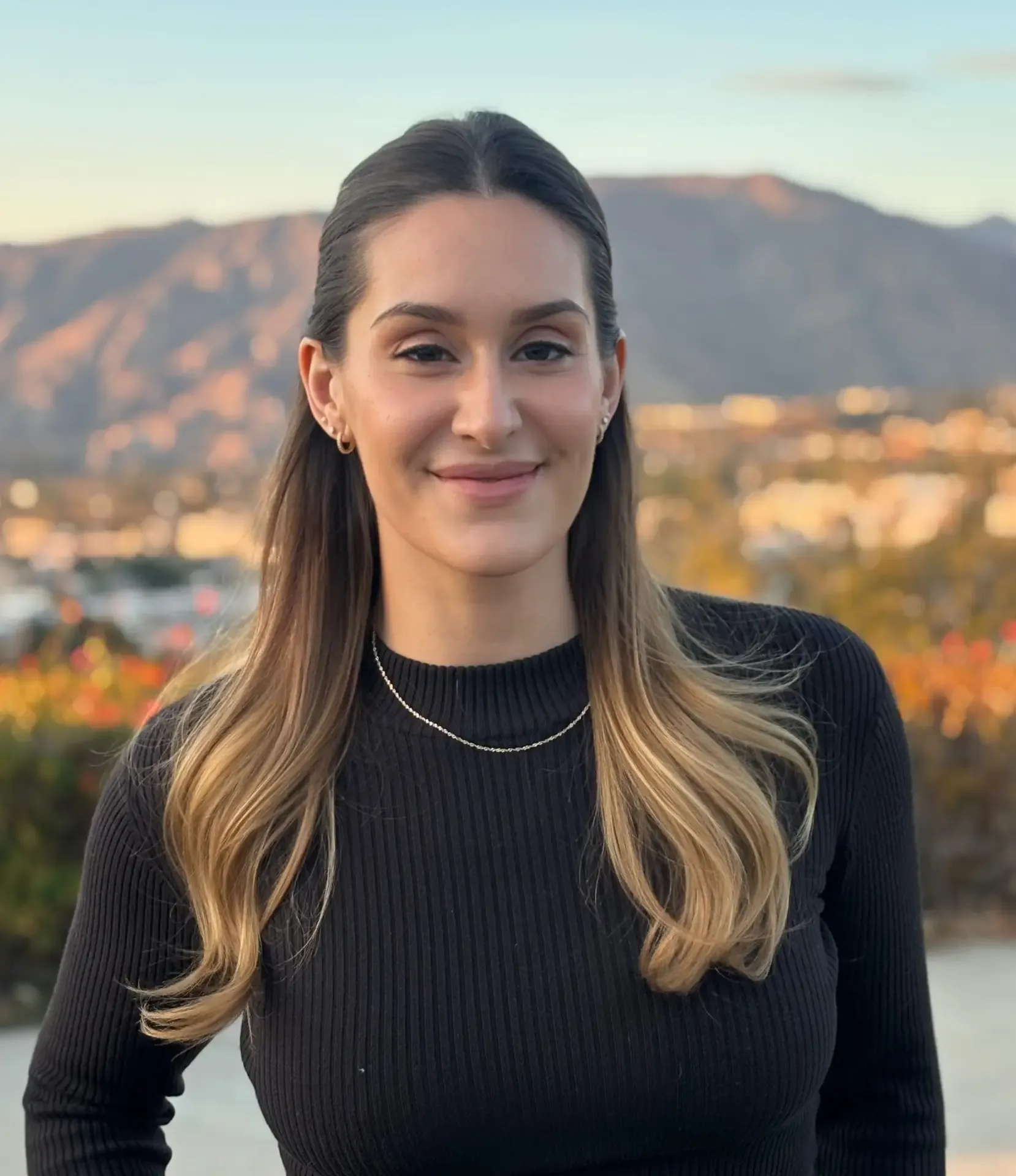
Brooke Sprowl, LCSW, founder of My LA Therapy
Brooke Sprowl, LCSW
Founder & Clinical Director
20 years in practice
More from Brooke
How to show up when you’re losing
What is living with a purpose?
Together we will:
  • ✓ Uncover hidden skills, strengths, and resiliency
  • ✓ Cultivate self-worth
  • ✓ Restructure past experiences
  • ✓ Break repeating patterns and step into new possibilities
  • ✓ Author a new story that reveals your inner unsung hero
How narrative therapy works

Rewrite the story,
and the meaning changes.

According to narrative therapy, our stories or narratives serve as our partial and subjective autobiography: a highly selective version of our past and present that can give us insight into how we process information, our strengths, and our opportunities to step into greater freedom. Often this subjective narrative is born out of trauma and pain, and it can become the focus of our identity and begin to dictate the way we engage with others relationally, as well as the way we see ourselves.

Our narratives can be empowering and allow us to achieve seemingly impossible feats, or they can be limiting, creating self-fulfilling prophecies and repeating patterns of pain.

When our stories are limiting and painful, our goal is to revisit the narrative to uncover the elements of the story that have been left out, so that we can begin to identify a new narrative. Together, we uncover hidden skills, strengths, and resiliency that may have been previously unrecognized. Sometimes it is as simple as understanding the strength and resiliency that exists as we survive lives of pain and loss.

In the process of narrative therapy, we concentrate on the effects of the problem presented rather than its causes. Our goal is to locate an alternate story, one that is true and reveals the unacknowledged courage and gifts beneath the suffering.


The narrative background

Separate the person
from the problem.

Narrative therapy evolved in the 1980s out of the thinking and practice of Michael White, an Australian, and David Epston, a New Zealander: two social workers who approached the practice of psychotherapy with the idea that the individual’s response to her own experience makes her, not the therapist, the expert.

Narrative therapy assumes that the problem itself is the problem (in other words, the client is not the problem), and that the stories that are told constitute the subjective truth of a life’s experience. The approach is centered on separating people from their problems.

In this formulation, respect for the client always shapes the narrative therapy process. We help you author a new story that reveals your inner unsung hero.

We are meaning-making machines, and changing our narratives leads to changes in our behavior and insight into our lives. Our stories are based on our experiences, and these in turn help us find our voice. That voice and story are how we uncover the truth of who we are.

A typical first question

“When did social anxiety first enter your life?”

This separates the client from the problem: you are not your anxiety. The question is directed towards locating the arc of the individual’s story with compassion and acceptance.

The narrative process

Step back from the story,
then sketch a new one.

We as therapists embark with you on identifying the dominant themes within your narratives.

Externalization

Distance from the problem

Through “externalization,” we help you distance yourself from your problems, and in the process differentiate yourself from the story as you deconstruct it.

Re-authoring

An alternate story

This opens the door to helping you change the narrative and sketch in an alternate story. The new story serves several purposes: it helps cultivate self-worth, it restructures past experiences, and it helps us break repeating patterns and step into new stories and possibilities.

Narrative techniques

Re-authoring,
in practice.

We focus on finding an alternate story, a re-authoring that is true to your experience. The effort is always to change the story and its meaning. This is achieved through role play, dramatization, and journaling, among other techniques.

We all are bound together by our stories, and we look forward to helping you reshape your narrative to live in a way that is more empowered, peaceful, and joyful.

Role play

Stepping into a part of your story with your therapist, rather than only reciting it, so the account can be explored from the inside.

  • – Revisit a moment from a new angle
  • – Notice the parts the old story left out
  • – Try out how the alternate story feels

Dramatization and psychodrama

You may act your experience out, utilizing psychodrama, giving the story a shape you can stand outside of and look at.

  • ✓ Differentiate yourself from the story
  • ✓ See the problem as separate from you
  • ✓ Rehearse the new narrative out loud

Journaling and writing

You may write about your own experience as well, putting the story on the page where it can be read, questioned, and rewritten.

  • Track the dominant themes in your story
  • Record the strengths you uncover
  • Draft the alternate story in your own words

Letters, poems and witnesses

Some therapists write letters and poems to the client. And if you’re really bold, you might even call together friends and family to introduce you and your new story.

  • + Hold on to the new account between sessions
  • + Let the people close to you witness it
  • + Live the story you have re-authored
Our therapy methods

Research-based methods,
combined for you.

Narrative therapy is rarely used alone. Our therapists draw from experiential, cognitive-behavioral, mindfulness and psychodynamic therapies — evidence-based interventions demonstrated by research to be effective.

Why our narrative therapy therapists

Evidence-based,
never by the book.

Plenty of therapists list narrative therapy. The difference is judgment — knowing when it is the right move and when the work belongs somewhere deeper. Every therapist on our roster is personally vetted and trained by our founder, Brooke Sprowl, LCSW, with 20 years in clinical practice — so your care is tailored to you rather than run off a protocol. Our team is highly trained and clinically skilled — and, more importantly, open, warm, and authentic. We’re humans too; we’ve been through our own struggles, and that is what equips us to help you navigate yours.

✓Personally vetted by Brooke Sprowl, LCSW
Status quo vs. My LA Therapy

Re-authoring,
with respect at the center.

Status quo
The My LA Therapy way
Status quo
✕A therapist who positions themselves as the expert and you as the problem to fix.
The My LA Therapy way
✓Therapists who treat you as the expert on your own experience, not as a case to be solved.
Status quo
✕Session after session spent hunting for the cause while the problem keeps running your life.
The My LA Therapy way
✓A focus on the effects of the problem rather than an endless search for its cause.
Status quo
✕A diagnosis that becomes your identity, with your strengths left out of the record.
The My LA Therapy way
✓Work that locates the unsung hero in your story — the strength and resiliency that survived.
Status quo
✕Rushed, impersonal care that leaves little room for your story to be heard.
The My LA Therapy way
✓Warm, experienced therapists committed to compassionate, client-centered care.
The standard we hold
Twenty years of clinical experience
behind every match.
★ 4.9average rating
100%match guarantee
Hand-matched, on us

Stop searching. We'll do it for you.

Tell us what's going on and we'll hand-select the right therapist for you.

1
You share what's going on
A few details — that's this form.
2
We hand-match you
Our therapist matching specialist personally matches you, usually the same day.
3
You meet, and decide
Love your therapist or get a full refund on your first session.
★★★★★
"I was in therapy on and off for 20 years. Brooke did more in one session than years of work with my previous therapists."

Let's find you the right therapist.

✓Every therapist vetted by Brooke Sprowl, LCSW · 20 years in practice
How can we help? *
Choose any that apply.
Which locations are most convenient for you?
More locations = more options
Free & confidential · Love your therapist — or your money back
★★★★★
"I was in therapy on and off for 20 years. Brooke did more in one session than years of work with my previous therapists."
Your team

Therapists trained in narrative therapy.

Meet the whole team →
Where we work

Eastside, Westside, and everywhere in between.

Seven offices across Los Angeles, plus secure online therapy anywhere in California.

West LABeverly HillsEncinoStudio CityEcho ParkPasadenaSanta Monica All locations
7 LA offices
Client reviews

When the story finally changed.

★★★★★4.9 average · verified client reviews
★★★★★
Brooke has the true gift of insight and compassion — getting straight to the heart of your blind spots in a way that’s truly changed my life.
★★★★★
I felt very seen, understood, and supported — Brooke went right to the source of the issue while staying so gentle and kind.
★★★★★
I’d been in therapy on and off for 20 years. Brooke did more in one session than years of work with my previous therapist.

The story can be re-authored. Let’s find the one that’s true.

One conversation is all it takes to know whether we’re the right fit.

Find my therapist →
Common questions

Before you reach out.

Still deciding? The free 30-minute consult exists for exactly this — no charge, no commitment.

▸ What does “the problem is the problem” mean?

It means the client is not the problem. Narrative therapy separates you from what you are struggling with — you are not your anxiety — so that the difficulty can be examined without it defining your identity.

▸ What is externalization?

A technique for putting distance between you and the problem, so that you can differentiate yourself from the story while you deconstruct it. It is usually where the work begins.

▸ Do I have to write things down?

Only if it helps. Journaling and writing are common, and so are role play, dramatization and psychodrama. Some therapists write letters and poems to the client. The method follows what works for you.

▸ Who developed narrative therapy?

Michael White and David Epston, two social workers, in the 1980s — on the premise that the individual’s response to her own experience makes her, not the therapist, the expert.

▸ Can we do this online?

Yes. We offer secure video sessions anywhere in California. Most of narrative therapy translates directly to video; where a part of it genuinely works better in the room, your therapist will tell you rather than pretend otherwise.

▸ How long does narrative therapy usually take?

It depends on how long the pattern has been running and what sits underneath it. It is not open-ended, though — your therapist will give you a realistic picture after the first session or two rather than a number up front.