My LA Therapy
LA ANXIETY, PANIC & OCD THERAPISTS

Anxiety therapy in LA
that reaches the root.

You’ve read the books and analyzed yourself ad nauseum, but your mind still won’t slow down. Our therapists are specially trained in somatic, experiential, and nervous system-based therapy that takes you beneath the symptoms to heal the root cause of anxiety, panic & OCD.

Anxiety therapy in Los Angeles

Anxiety takes many shapes.

A few of the ways anxiety commonly shows up for our therapy clients.

overthinkingthought loopsself-doubtheart racingpit in stomachtight chestcan't switch offperfectionismalways on edgehealth anxietyrestlesspanic
WHY WE DO THIS WORK
“Life’s challenges are not supposed to paralyze you, they’re supposed to help you discover who you are.”
— Bernice Johnson Reagon
FROM THE FOUNDER OF MY LA THERAPY

Diving deeper into anxiety.

Our founder Brooke Sprowl, LCSW has 20 years of experience specializing in anxiety. Her signature approach, Nervous System-Based Therapy, intervenes at an unconscious level to help heal the patterns running the show beneath the surface.

RESEARCH-BASED THERAPY FOR ANXIETY

If you’re struggling with anxiety, we get it.

While some anxiety is a normal part of life, when it’s accompanied by feelings of hopelessness or loss of control, or when it starts to interfere with your everyday functioning, it crosses over into something treatable. If you frequently experience overwhelm, thought spirals, or an inexplicable sense of dread, this is your nervous system signaling it needs support to shift the patterns and the way it processes emotions.
The good news is that anxiety is remarkably responsive to treatment, and there are many research-based therapy approaches that are scientifically proven to help. Anxiety is one of the things we understand most deeply and treat most often. On this page we’ll walk through what anxiety actually is, the shapes it takes, and how the right therapist helps it change.
WHAT ANXIETY SOUNDS LIKE

Does this sound like you?

"I wake up with a pit in my stomach. I have no idea why."
"No matter how much I analyze my anxiety, it doesn’t change."
“I’m exhausted all day, then wide awake the second my head hits the pillow.”
“I go through my day with tight chest, clenched jaw, and my stomach in knots.”
“I can explain my anxiety. But I can’t slow down or stop my thoughts from racing.”
“If I relax or stop worrying, it feels like something bad will happen.”

If you’re nodding, that’s exactly where we begin.

Find my therapist →
What anxiety actually is

Your alarm system, without a snooze button.

Some anxiety is part of being human like nerves before a presentation, butterflies before a date. It’s your nervous system doing its job. But when worry stops being situational and becomes pervasive, excessive, or difficult to manage, it requires specialized care.

Even though anxiety is a universal human experience, when it goes off the rails, it can turn into a condition that needs attention. When anxiety starts to feel all-encompassing and lasts for a prolonged period of time, it crosses into Anxiety Disorder territory. If you have an inkling you might be experiencing Anxiety Disorder, here are some telltale symptoms you should be on the lookout for.

Generalized Anxiety Disorder

The worry that never lands on one thing for long. It moves from your health to your work to the people you love, and it doesn’t switch off just because life looks fine.

  • Restless, irritable, always on edge
  • Racing, looping thoughts
  • Tense muscles, drained body
  • Difficulty concentrating
  • Trouble falling or staying asleep
  • Excessive worrying

Panic Attacks

Sudden waves of fear so physical they’re often mistaken for a heart attack. A panic attack isn’t dangerous, but your body doesn’t know that, and dread of the next one can start to run your life.

  • Sudden sense of doom
  • Pounding heart
  • Chest tightness, can’t breathe
  • Hot flashes, chills, sweating
  • Nausea or stomach pain
  • Feeling detached from reality

Illness Anxiety Disorder

Once called hypochondria: a mind that keeps insisting something is medically wrong, no matter how many times you’ve been checked and reassured. It often takes root after loss, trauma, or a long stretch of stress.

  • Certain something is seriously wrong
  • Constant body-checking
  • Avoiding doctors or switching often
  • Endless symptom-Googling (aka cyberchrondria)
  • Reassurance never quite lands
  • Health worry that won’t quiet

Obsessive Compulsive Disorder (OCD)

OCD comes in many forms. One of the least known kinds of OCD is called "Pure O" OCD. This has obsessive symptoms without behavioral compulsions and can be difficult to diagnose because it appears similar to Generalized Anxiety Disorder, but the treatment protocol is different.

  • + Intrusive, unwanted thoughts, obsessions, or thought loops
  • + Checking, washing, or repeating rituals
  • + Mental reviewing, counting, or praying
  • + Seeking reassurance again and again, internally or from others
  • + You know these thoughts are irrational but they still cause significant distress
Our founder’s signature approach

Nervous System-Based Therapy.

The original framework our founder developed over twenty years in practice, and the backbone of how we treat anxiety: working with the alarm itself, not just the thoughts it produces.

Developed by our founder Brooke Sprowl, LCSW
01

Physiological state calibration

Real-time anxiety modulation, nervous system regulation, and autonomic tracking let us catch anxiety as it rises in the room and turn your system’s volume back down in real-time.

02

Defense system mapping

Unconscious anxiety activates defense mechanisms that once kept us safe but tend to cause reverberating harmful patterns that keep us stuck. We identify and compassionately interrupt these defense mechanisms to break the cycle.

03

Multi-modal processing

Anxiety travels different pathways in different people, through thinking, muscle, or gut. We work somatically, experientially, cognitively, and with parts, understanding various pathways of anxiety require different interventions.

See how it works →
PATHWAYS OF ANXIETY

Anxiety isn’t just in your head. It lives in your body.

One reason anxiety gets missed, even by good clinicians, is that it moves through different channels in different people. Clinically, we watch for three main pathways. Knowing which one yours takes changes how your therapy should work.

Thinking and perception

Cognitive-Perceptual
Anxiety

  • Racing or scattering thoughts
  • Blanking mid-sentence, losing your thread
  • Tunnel vision, fog, feeling far away
  • Migraines
The voluntary muscles

Striated Muscle Anxiety

  • Clenched jaw, tight chest and shoulders
  • Sighing breaths, tension headaches
  • Fatigue from a body that never unclenches
  • The classic wound-up anxiety
The organs and gut

Smooth Muscle Anxiety

  • A pit in your stomach, waves of nausea
  • IBS-like cramping and digestive flare-ups
  • Bladder urgency, always needing a bathroom nearby
  • Often reaches the doctor before it’s named anxiety

What this means for your therapy.

The pathway your anxiety takes is not trivia. It tells us how your nervous system is regulating under pressure, and it shapes where therapy should start and how fast it can safely go.

This is exactly the level where Nervous System-Based Therapy, our founder’s signature approach, does its work. Instead of only talking about anxiety from a distance, your therapist tracks these signals with you in the room, helps your body discharge stress through safer channels, and gradually teaches the alarm itself to stand down.

Anxiety disorders we treat

Types of anxiety disorders.

Anxiety rarely introduces itself by name. It shows up as a racing heart, a triple-checked lock, another hour of symptom-Googling. Sometimes it shows up as a fight with food and the mirror. Whatever shape yours has taken, your therapy is built around that shape, not a generic protocol.


OUR ANXIETY THERAPISTS

Not the next name
in a directory — the right therapist chosen for you.

Every therapist on our team is rigorously vetted and trained by our founder, Brooke Sprowl, LCSW with 20 years of clinical experience. So when you come to us for anxiety, we hand-select your therapist from our small, boutique roster based on your needs, your personality, and your preferences.

Personally vetted by Brooke Sprowl, LCSW
The standard we hold
Twenty years of clinical experience behind every match.
4.9average rating
100%match guarantee
Hand-matched, on us

Stop searching. We'll do it for you.

Tell us what's going on and we'll hand-select the right therapist for you from our small, boutique roster of highly vetted clinicians.

1
You share what's going on
A few details — that's this form.
2
We hand-match you
Our therapist matching specialist personally matches you — usually the same day.
3
You meet, and decide
Love your therapist or get a full refund on your first session.
★★★★★
"I was in therapy on and off for 20 years. Brooke did more in one session than years of work with my previous therapists."

Let's find you the right therapist. 

Every therapist vetted by Brooke Sprowl, LCSW · 20 years in practice
How can we help? *
Choose all that apply.
Where would you like to meet?
More locations = more options
Free & confidential · Love your therapist — or your money back
"I was in therapy on and off for 20 years. Brooke did more in one session than years of work with my previous therapists."
★★★★★
What to expect

What anxiety therapy actually looks like.

The good news is that anxiety is among the most treatable things we see. Not by pushing against it harder, but by teaching your nervous system, gently and repeatedly, that it’s safe to stand down.

01
A free 30-minute consult
You tell us what’s going on. We listen for what kind of anxiety this actually is — and who on the roster fits it.
02
Your first session
Less history-taking than you expect. Your therapist maps where the anxiety lives — in your body, your day, your relationships.
03
The work itself
Weekly sessions that build capacity, not just insight. You leave with something to practice — a workout for your well-being.
04
What changes
The trigger still comes. The spiral doesn’t follow. Most people notice it first in sleep, then in how quickly they recover.
THERAPISTS SPECIALIZING IN ANXIETY

Every therapist here treats anxiety.

Personally vetted and trained by our founder, and chosen for this page because anxiety is central to their work. Tell us what’s going on and we’ll hand-select the right one for you.


Meet the whole team →
Status quo vs. My LA Therapy

There’s a better way to find your therapist.

Status quo
You cycle through dozens of therapists, unsure if they really fit your needs.
You pay for your initial session whether it’s the right fit or not.
Therapists offer a listening ear but little feedback.
Therapy interventions are thin and lack actionable application.
The therapy focuses on intellectual insight, leaving deeper problems untouched.
Symptoms get managed for a while, then return the moment life turns up the pressure.
Years can pass with no clear sense of whether anything is actually changing.
The My LA Therapy way
We personally match you with a therapist who fits your unique needs, personality, and values.
We guarantee you’ll love your therapist — or you get a full refund on your first session.
We offer practical feedback and actionable advice, challenging you to think and exist differently.
We use research-based interventions that are scientifically proven to work.
We intervene on a somatic and nervous system-level, interrupting unconscious patterns in real-time.
We treat the root cause, not just the symptoms, so change holds.
We give you tangible tools you keep for life, for lasting change that outlasts the therapy.
Get matched →
HELP FOR ANXIETY STARTS HERE

Start with a free call.

A conversation with someone who knows every therapist on our roster, and exactly who fits your unique needs, personality, and preferences.

30 minutes, free. No charge, no commitment.
We listen, then hand-select your therapist from our small, boutique roster.
We guarantee you’ll love your therapist or you get a full refund on your session.
Book a free call →
Illustration of a therapist and client in conversation
LA ANXIETY THERAPY IN-PERSON

In-person therapy for anxiety across Los Angeles.

Our warm and experienced anxiety specialists in LA offer in-person therapy in 7 locations across the city, plus online therapy anywhere in California, or a mix of both.

Santa MonicaWest LABeverly HillsEncinoStudio CityEcho ParkPasadena We come to you* Online (in CA)

*Available within a certain radius — get matched to find out more.

7 LA offices
How we treat anxiety

Research-based anxiety therapy, not one-size-fits-all.

Anxiety responds to different approaches depending on how it’s presenting and based each person’s unique nervous system, temperament, and needs. We match you with a therapist who specializes in research-based therapy approaches for anxiety that fit your individual needs and preferences.

Client reviews

When the anxiety finally eased.

★★★★★4.9 average · verified client reviews
Anxiety & Burnout★★★★★
Brooke has the true gift of insight and compassion — getting straight to the heart of your blind spots in a way that’s truly changed my life.
— S.M., Santa Monica
Trauma & C-PTSD★★★★★
I felt very seen, understood, and supported — Brooke went right to the source of the issue while staying so gentle and kind.
— J.R., Brentwood
Codependency★★★★★
I’d been in therapy on and off for 20 years. Brooke did more in one session than years of work with my previous therapist.

— D.L., Silver Lake
My LA Therapy
A CBT WORKBOOK

Mindset Mastery Guide

A research-based guide for mastering irrational thoughts.
Brooke Sprowl, LCSW
mylatherapy.com
Free resource for anxiety & depression

Learn to quiet your most anxious thoughts.

Learn scientifically proven CBT techniques to overcome anxiety, depression, and irrational thoughts so you can see yourself in more realistic and empowering ways.

Inside the guide · 6 pages
My LA Therapy
A CBT WORKBOOK

Mindset Mastery Guide

A research-based guide for mastering irrational thoughts.
Brooke Sprowl, LCSW
mylatherapy.com
Mindset Mastery Guide
My LA Therapy
Mindset Mastery Guide
Mastering Irrational Thoughts

Think of this guide like a workout for your well-being.

The more you practice, the better your mental endurance and fitness will be. Practice often to create greater resiliency, self-esteem, and courage.

Often our anxiety, depression, and poor self-esteem are triggered by Thought Distortions that reinforce our deepest fears about ourselves, others, and our future.

We tend to unquestioningly accept these Thought Distortions as true when we leave them unchecked and do not examine them more deeply.

With a deeper investigation of our Thought Distortions, we may discover important truths about ourselves and how these knee-jerk, reactive thoughts contribute to our negative, Self-Limiting Core Beliefs and narratives.

Cognitive Behavioral Therapy (CBT) is a research-proven technique that can help transform depression, anxiety, and low self-esteem and help us see ourselves and the world in more empowering, balanced, and realistic ways.

CBT takes the scientific method and uses it to kick Distorted Thoughts to the curb so we can become more confident, peaceful, and hopeful.

This is the beginning of creating the life you've always wanted and becoming the person you've always wanted to be.

mylatherapy.com1 of 6
A workout for your well-being
My LA Therapy
The Thought Record
Worked example
Trigger Situation
What happened, where, and who were you with? Describe it in detail.
"I had a fight with my boyfriend about moving in together."
Trigger Feelings
Name the feelings that arose, and rate each from 1–10 (10 = most extreme).
Anxious · 8Depressed · 7Rejected · 5
Your Thought Distortion
What went through your mind? What did you tell yourself this means about you, others, or your future?
"He’s going to break up with me." "No one will ever love me." "I don’t want to be alone."
Evidence for Your Thought Distortion — The Lawyer
Like a lawyer, list only the facts that support this thought — no interpretation or mind-reading.
"My past relationships were ended by my partners. He said he doesn’t want to move in. My dad left when I was a kid."
Thought Transformation — The Judge
Like a judge, weigh both sides into one balanced statement. Rate how much you believe it, 1–10.
"Even though I’ve felt rejection before and he isn’t ready to move in yet, many people love me and I am not alone."
Rate Feelings
Now re-rate your Trigger Feelings from 1–10.
Anxious · 4Depressed · 3Rejected · 1
mylatherapy.com2 of 6
Step-by-step CBT technique
My LA Therapy
The Thought Record
Your turn
Trigger Situation
What happened, where, and who were you with? Describe it in detail.
Trigger Feelings (rate 1–10)
Name the feelings that arose, and rate each from 1–10 (10 = most extreme).
Your Thought Distortion
What went through your mind? What did you tell yourself this means about you, others, or your future?
Evidence for Your Thought Distortion — The Lawyer (facts only)
Like a lawyer, list only the facts that support this thought — no interpretation or mind-reading.
Thought Transformation — The Judge (rate 1–10)
Like a judge, weigh both sides into one balanced statement. Rate how much you believe it, 1–10.
Rate Feelings (rate 1–10)
Now re-rate your Trigger Feelings from 1–10.
mylatherapy.com3 of 6
Apply your real life situation
My LA Therapy
Mindset Mastery Guide
Prompts

Questions to help challenge your Thought Distortions

01Have I had any experiences that show that this thought is not completely true all the time?
02If my best friend or someone I loved had this Thought Distortion, what would I tell them?
03If my best friend or someone who loves me knew I was thinking this thought, what would they say to me? What evidence would they point out to me that would suggest that my thoughts were not 100% true?
04When I am not feeling this way, do I think about this type of situation any differently? How?
05When I have felt this way in the past, what did I think that helped me feel better?
06Have I been in this type of situation before? What happened? Is there anything different between this situation and previous ones? What have I learned from prior experiences that could help me now?
07Are there any small things that contradict my Thought Distortion that I might be discounting as not important?
08Five years from now, if I look back at this situation, will I look at it any differently? Will I focus on any different part of my experience?
09Are there any strengths or positives in me or in the situation that I am ignoring?
10Am I blaming myself for something over which I do not have complete control?
mylatherapy.com4 of 6
Prompts to challenge irrational thoughts
My LA Therapy
Next steps

Next steps.

Our Thought Mastery Guide is just one of many research-proven tools we use to help you overcome your inner roadblocks, find greater peace, and support your self-transformation.

To dive deeper and take your transformation to the next level, book a free call with our Matching Specialist so we can pair you with one of our warm, experienced therapists.

Book a free call →

To book a free call, click the button above or learn more at: mylatherapy.com

We are here to answer any questions and to empower you to discover new ways of being to create a more purposeful, peaceful, and soulful life.

Brooke Sprowl6 of 6
Next steps
A NOTE FROM OUR FOUNDER

You are not broken. And this can change.

I spent more than 10 years trying to find help for my anxiety. I know this territory so deeply because I’ve lived it personally. I know what it feels like to wake up each morning with an inexplicable sense of dread, to feel paralyzed from anxiety, and to struggle to go to sleep because you can’t quiet your anxious thoughts.

You are not weak, and you are not too much. Anxiety tends to live in brilliant, capable, deeply feeling people. In twenty years of practice, we have rarely met an exception.

It changes when someone helps you work with your nervous system instead of against it, at a pace your body can trust. People sit where you are sitting right now and go on to live lives that anxiety no longer runs. We would love for you to be one of them.
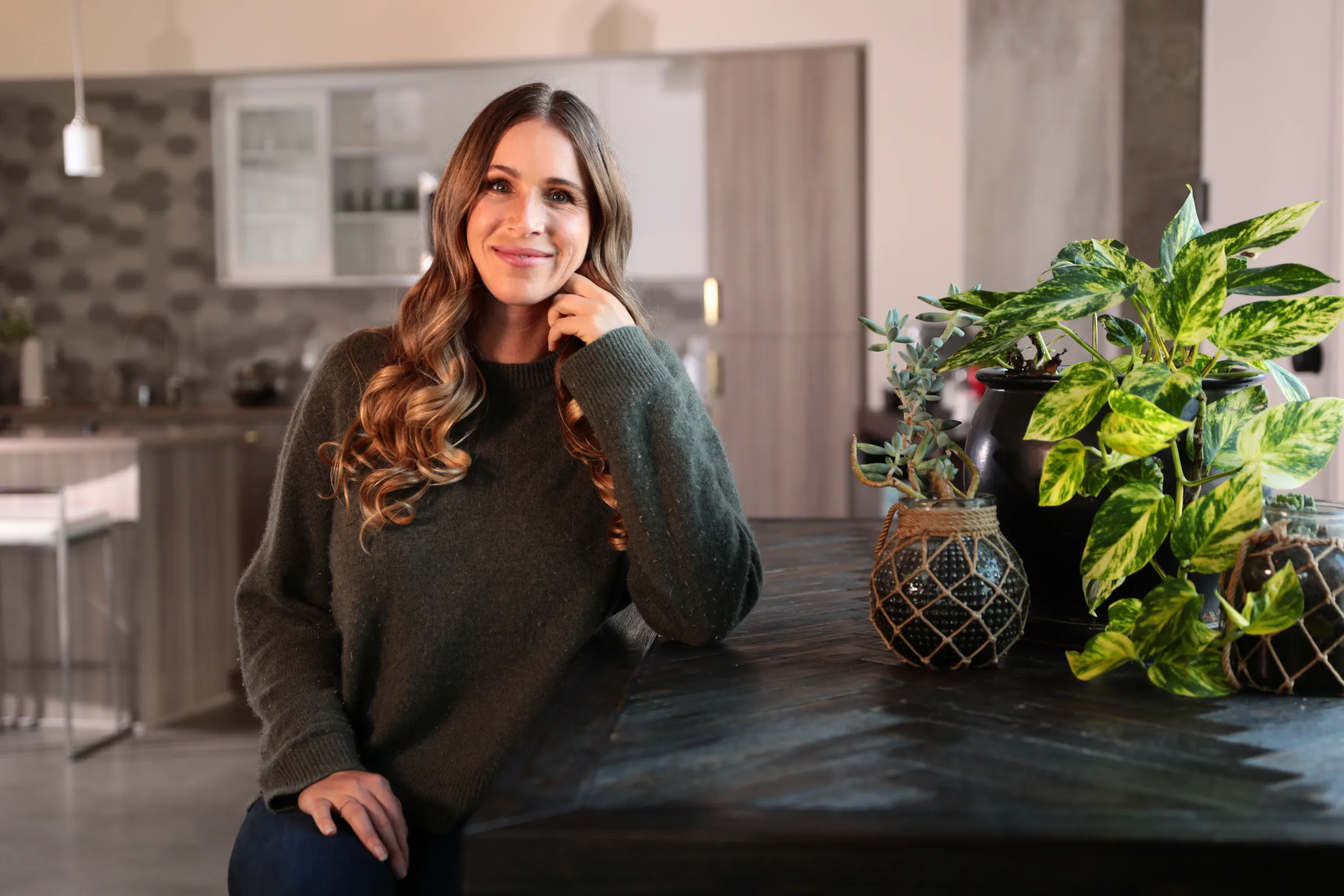
Brooke Sprowl, LCSW — Founder & Clinical Director of My LA Therapy

Your anxiety has been loud for long enough. Let’s turn the volume down.

You deserve a life anxiety doesn’t get to run. One conversation is all it takes to know whether we’re the right people to help you take it back.

Find my anxiety therapist →
FAQS ABOUT ANXIETY THERAPY

Before you reach out.

Still deciding? The free 30-minute consult exists for exactly this — no charge, no commitment.

How is this different from just talking about my anxiety?
Talking builds understanding, and understanding alone rarely settles an anxious nervous system. Our therapists work with what your body is doing in the moment — so the change registers below the level of insight, where anxiety actually lives.
I’ve tried therapy for anxiety before and it didn’t work. Why would this be different?
Usually because the fit was wrong or the approach stopped at insight. We hand-select your therapist for your specific anxiety rather than handing you a directory, and if you don’t love your match, you can tell us and we’ll make it right.
Do you treat panic attacks and OCD?
Yes. Panic, OCD, health anxiety, social anxiety, and generalized anxiety are all part of this specialty, and they call for genuinely different clinical skill sets. That’s why the match matters as much as the method.
How long does anxiety therapy take?
Most people feel a shift in the first several weeks and do meaningful work over a few months. Your therapist will be candid with you about what your situation likely calls for.
Do you offer online anxiety therapy?
Yes. You can meet online across California, or in person at any of our LA offices. Many clients mix the two, and for anxiety specifically, being able to keep the session when the week goes sideways matters more than the room.
How do you decide which therapist I see?
You tell us what’s going on, and we hand-select from our small, boutique roster. Every therapist on it is personally vetted and trained by our founder. We weigh your unique needs, personality, and values against each therapist’s specialties and style, and we factor in the practical pieces too, like which of our locations are convenient for you and when you’re free to meet. It’s a human judgment call, not an algorithm.